Mythe n°1 : « La psychomotricité, c’est juste faire du sport. »
On entend encore tellement souvent que la psychomotricité consisterait simplement à « faire bouger les enfants », comme s’il s’agissait d’une sorte de séance de sport adaptée. La psychomotricité s’intéresse au lien entre le corps, les émotions, la pensée et la relation à l’autre. Lorsqu’un enfant grimpe, saute ou manipule, il travaille aussi sa sécurité intérieure et sa confiance. C’est en passant par l’action vécue qu’il développe sa capacité à se concentrer, à planifier, à se repérer dans l’espace, à entrer dans les apprentissages. Le corps est son premier outil pour comprendre le monde. Le mouvement est un moyen, pas une finalité.
Mythe n°2 : « La psychomotricité, c’est un peu comme des kinésithérapeutes ou des ergothérapeutes »
Il arrive aussi qu’on imagine le psychomotricien comme un kiné ou un ergo. Ces métiers sont en réalité très complémentaires et partagent une même vision du développement de l’enfant comme un processus global, où le sensorimoteur, l’affectif et les fonctions cognitives se construisent ensemble, toujours en lien avec l’environnement dans lequel l’enfant évolue. Ce qui diffère, c’est la porte d’entrée. Le kinésithérapeute s’appuie davantage sur l’organisation sensori-motrice et la structuration du corps pour permettre des répercussions sur le reste du développement. L’ergothérapeute, lui, agit beaucoup à partir de l’adaptation de l’environnement, du matériel ou des situations pour rendre l’enfant plus autonome et soutenir ses compétences. Le psychomotricien se situe au croisement de ces dimensions : il travaille à rééquilibrer les liens entre le corps, les émotions et les fonctions cognitives, en accompagnant l’enfant dans des expériences vécues qui prennent sens pour lui au sein de son environnement.
Mythe n°3 : « C’est seulement pour les enfants maladroits. »
On associe encore trop souvent la psychomotricité aux enfants dits maladroits. Pourtant, certains enfants courent vite, grimpent partout, et rencontrent malgré tout des difficultés pour se poser, organiser leur geste graphique, gérer leurs émotions ou trouver leur place dans un groupe. Le psychomotricien a toute sa place dans les différents exemples que je viens d’évoquer.
Mythe n°4 : « On consulte uniquement quand il y a un trouble diagnostiqué. »
Beaucoup de familles pensent qu’il faut attendre qu’un diagnostic soit posé pour franchir la porte d’un cabinet. Pourtant, plus l’accompagnement est proposé tôt, plus il s’intègre naturellement dans la dynamique du développement, et plus il soutient l’enfant avec douceur et efficacité. Le psychomotricien a aussi un rôle important d’observation et de compréhension globale : à travers le bilan psychomoteur, il aide à éclairer le fonctionnement de l’enfant, à repérer ses appuis comme ses fragilités, et à orienter si besoin vers les professionnels les plus adaptés. Il participe ainsi, lorsque c’est nécessaire, au cheminement qui permet de mieux comprendre la situation, sans attendre que les difficultés ne s’installent ou ne se majorent.
Mythe n°5 : « Je ne comprends pas pourquoi il y a « psycho » dans psychomotricité c’est que le corps »
Enfin, la présence du mot « psycho » dans psychomotricité surprend parfois, comme si l’on parlait uniquement du corps. Chez l’enfant, on ne peut pourtant jamais séparer le corporel du psychique. Les émotions modifient le tonus, la confiance influence l’équilibre, le sentiment de sécurité permet l’exploration. Un enfant inquiet peut se crisper et perdre en coordination ; un enfant rassuré ose, essaie, recommence et progresse. La psychomotricité prend soin de cette unité profonde : un corps qui ressent, une pensée qui s’organise, une relation qui se construit. C’est dans les jeux du quotidien, en marchant sur un muret, en construisant une cabane, en manipulant, en prenant le temps d’expérimenter avec tout son corps, que l’enfant développe ces fondations. L’essentiel n’est pas d’aller plus vite, mais de lui permettre d’éprouver, d’ajuster et de gagner en aisance. C’est souvent dans ces expériences simples, répétées avec plaisir, que se tissent les bases les plus solides pour grandir, apprendre et trouver sa place.
Margaux Gaudin
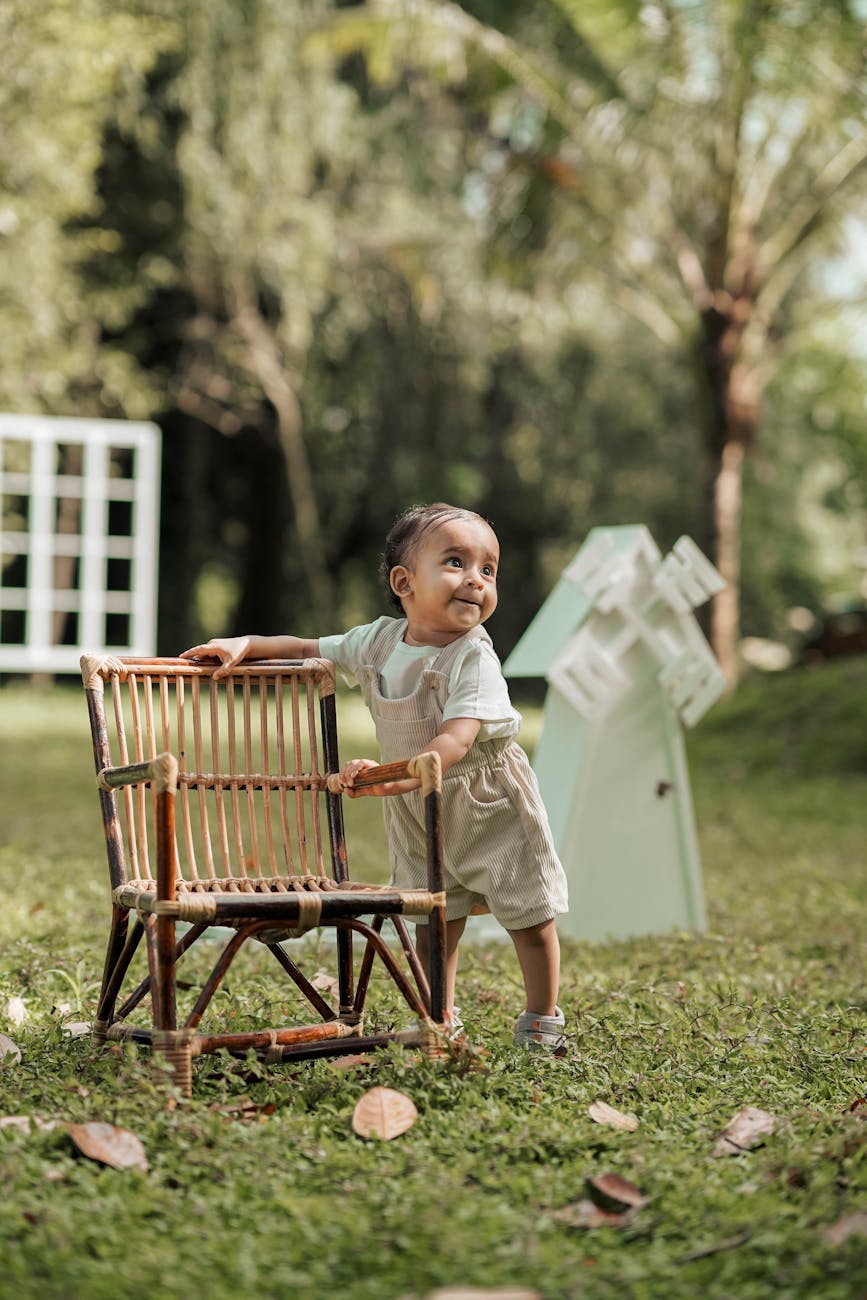
Myth 1: “Psychomotricity is just about doing sports.”
We still so often hear that psychomotricity simply consists of “getting children to move,” as if it were some kind of adapted sports session. In reality, psychomotricity focuses on the connection between the body, emotions, thinking, and relationships with others. When a child climbs, jumps, or manipulates objects, they are also working on their inner sense of security and self-confidence. Through lived action, they develop their ability to concentrate, plan, orient themselves in space, and engage in learning. The body is their first tool for understanding the world. Movement is a means, not an end.
Myth 2: “Psychomotricity is kind of like physiotherapy or occupational therapy.”
Sometimes people imagine a psychomotor therapist as similar to a physiotherapist or an occupational therapist. In reality, these professions are highly complementary and share a common view of child development as a global process, where sensorimotor, emotional, and cognitive functions are built together, always in interaction with the child’s environment. What differs is the entry point. The physiotherapist focuses more on sensory-motor organization and body structuring to create positive effects on overall development. The occupational therapist often works through adapting the environment, materials, or situations to foster autonomy and support the child’s skills. The psychomotor therapist stands at the crossroads of these dimensions, working to rebalance the links between the body, emotions, and cognitive functions by guiding the child through meaningful lived experiences within their environment.
Myth 3: “It’s only for clumsy children.”
Psychomotricity is still too often associated with so-called clumsy children. Yet some children run fast and climb everywhere, and still experience difficulties settling down, organizing their handwriting, managing their emotions, or finding their place within a group. The psychomotor therapist has an important role in all the examples mentioned above.
Myth 4: “You only consult when there is a diagnosed disorder.”
Many families believe they need to wait for a formal diagnosis before seeking support. However, the earlier guidance is offered, the more naturally it integrates into the child’s developmental dynamics, and the more gently and effectively it supports them. The psychomotor therapist also plays an important role in observation and global understanding: through a psychomotor assessment, they help shed light on the child’s functioning, identify both strengths and vulnerabilities, and, if necessary, refer to the most appropriate professionals. In this way, when needed, they contribute to a process that helps better understand the situation—without waiting for difficulties to become entrenched or worsen.
Myth 5: “I don’t understand why there’s ‘psycho’ in psychomotricity—it’s just about the body.”
Finally, the presence of the word “psycho” in psychomotricity can sometimes be surprising, as if the field were concerned only with the body. Yet in children, the physical and the psychological can never be separated. Emotions influence muscle tone, confidence affects balance, and a sense of security enables exploration. An anxious child may tense up and lose coordination; a reassured child dares, tries, tries again, and progresses. Psychomotricity cares for this deep unity: a body that feels, a mind that organizes itself, and relationships that are built. It is in everyday play—walking along a low wall, building a cabin, manipulating objects, taking time to experiment with the whole body—that children develop these foundations. The goal is not to go faster, but to allow them to experience, adjust, and gain ease. Often, it is in these simple experiences, repeated with pleasure, that the strongest foundations for growing, learning, and finding one’s place are woven.
Margaux Gaudin
LIVE PSYCHOMOT
Articles sur le développement psychomoteur
 LIVE PSYCHOMOT