De nombreux parents souhaitent inscrire leur enfant à la musique : piano, violon, guitare ou batterie. Au-delà du plaisir artistique, l’apprentissage d’un instrument constitue une expérience particulièrement riche pour le développement global de l’enfant. Du point de vue psychomoteur, jouer d’un instrument mobilise simultanément le corps, les émotions et les capacités cognitives.
Le corps au cœur de l’apprentissage musical
Apprendre un instrument ne consiste pas seulement à produire des sons. L’enfant engage son corps dans une activité précise et organisée. La position des mains, la posture, la respiration ou encore le rythme des mouvements doivent progressivement s’ajuster pour permettre un geste musical fluide.
Cette activité sollicite plusieurs dimensions psychomotrices. L’enfant développe notamment sa coordination motrice, en apprenant à synchroniser ses gestes. Il travaille également la latéralisation, en différenciant le rôle de chaque main, ainsi que son schéma corporel, c’est-à-dire la perception et l’organisation de son corps dans l’action. Le tonus musculaire joue aussi un rôle essentiel : il doit être suffisamment ajusté pour permettre précision et souplesse.
Selon l’instrument choisi, ces compétences sont mobilisées de manière différente. Le piano demande par exemple une grande indépendance des doigts, tandis que le violon implique un contrôle postural important et une coordination fine entre les deux bras.
Attention et régulation de l’action
La pratique musicale sollicite fortement l’attention de l’enfant. Il doit écouter, anticiper les notes, suivre un rythme et coordonner ses gestes en même temps. Cette mobilisation participe au développement de plusieurs fonctions cognitives importantes, notamment la concentration, la mémoire de travail et la capacité à organiser son action dans le temps.
Dans une perspective psychomotrice, ces compétences participent à la régulation de l’action. L’enfant apprend progressivement à ajuster ses gestes, à corriger ses erreurs et à maintenir son attention sur une tâche.
Une expérience sensorielle riche
La musique est également une activité sensorielle particulièrement complète. L’enfant mobilise son audition pour percevoir les sons, les rythmes et les nuances. Le toucher intervient dans la relation avec l’instrument, qu’il s’agisse de touches, de cordes ou de percussions.
La proprioception, c’est-à-dire la perception interne de la position du corps, joue aussi un rôle essentiel. Elle permet à l’enfant de sentir la position de ses doigts, de ses mains ou de ses bras sans avoir besoin de les regarder constamment. Cette intégration des informations sensorielles contribue à affiner les gestes et à améliorer la précision motrice.
Respecter le rythme de l’enfant
Pour que l’apprentissage reste bénéfique, il est important qu’il respecte le rythme de développement de l’enfant. Une exigence trop importante ou une pression excessive peuvent transformer cette activité en source de stress.
L’encouragement et le plaisir de jouer doivent rester au centre de l’expérience. La progression en musique se construit souvent par répétition et par petites étapes. Il est également normal que la motivation de l’enfant fluctue au fil du temps.
Lorsque l’enfant peut explorer l’instrument avec curiosité et plaisir, les apprentissages s’ancrent plus durablement.
Un espace d’expression émotionnelle
Enfin, la musique offre un espace d’expression particulier. À travers les sons, le rythme et l’intensité du jeu, l’enfant peut exprimer des émotions qu’il ne verbalise pas toujours facilement.
Dans l’approche psychomotrice, le corps est considéré comme un support d’expression et de communication. L’activité musicale peut ainsi devenir un moyen pour l’enfant d’explorer ses ressentis, de développer sa créativité et de renforcer sa confiance en lui.
En conclusion
L’apprentissage d’un instrument ne se limite pas à une activité artistique. Il constitue une expérience globale qui engage le corps, les sens, l’attention et les émotions. Du point de vue psychomoteur, la pratique musicale contribue au développement de la coordination, de la régulation motrice et de la conscience corporelle, tout en offrant à l’enfant un espace de plaisir et de créativité.
Marion Bonvarlet
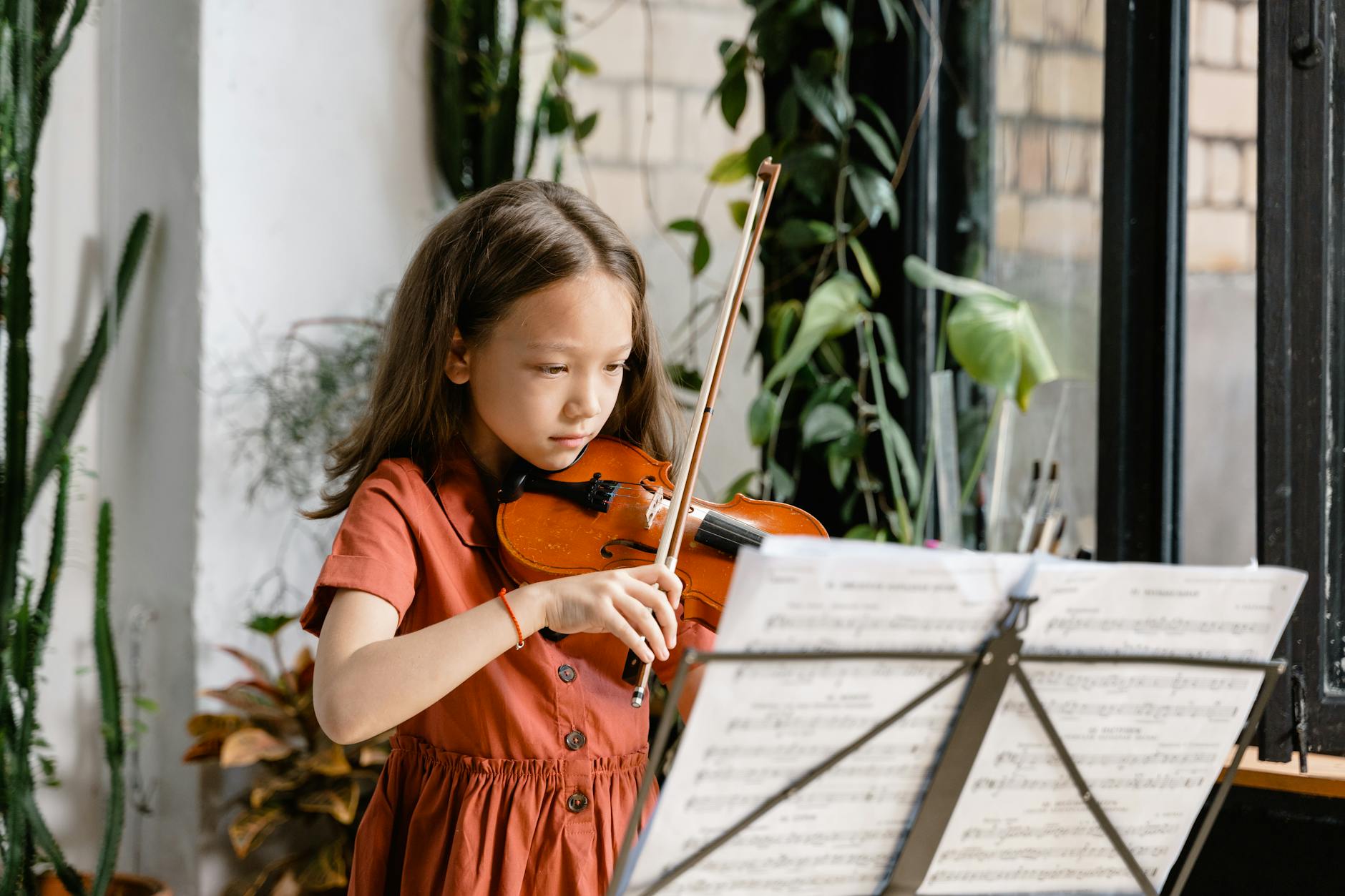
Many parents choose to enroll their child in music lessons, whether for piano, violin, guitar, or drums. Beyond the artistic pleasure it provides, learning a musical instrument can be a very enriching experience for a child’s overall development. From a psychomotor perspective, playing an instrument involves the body, emotions, and cognitive abilities all at once.
The body at the heart of musical learning
Learning an instrument is not only about producing sounds. The child engages their body in a precise and organized activity. The position of the hands, posture, breathing, and the rhythm of movements must gradually adjust in order to produce fluid musical gestures.
This activity stimulates several psychomotor dimensions. Children develop motor coordination as they learn to synchronize their movements. They also work on laterality by differentiating the role of each hand, as well as their body schema, which refers to the awareness and organization of the body in action. Muscle tone also plays an essential role, as it must be finely adjusted to allow both precision and flexibility.
Depending on the instrument, these abilities are used in different ways. For instance, playing the piano requires strong finger independence, while the violin demands significant postural control and coordination between both arms.
Attention and regulation of action
Practicing music strongly engages a child’s attention. They must listen carefully, anticipate notes, follow a rhythm, and coordinate their movements simultaneously. This type of engagement supports the development of several important cognitive abilities, including concentration, working memory, and the capacity to organize actions over time.
From a psychomotor perspective, these skills contribute to the regulation of action. Gradually, the child learns how to adjust their movements, correct mistakes, and maintain attention on a task.
A rich sensory experience
Music is also a particularly rich sensory activity. Children use their hearing to perceive sounds, rhythms, and variations in intensity. Touch also plays an important role through the contact with the instrument, whether it involves keys, strings, or percussion.
Proprioception—the internal sense of the body’s position—is equally essential. It allows children to feel the position of their fingers, hands, and arms without constantly looking at them. This integration of sensory information helps refine movements and improve motor precision.
Respecting the child’s pace
For musical learning to remain beneficial, it is important to respect the child’s developmental pace. Excessive expectations or pressure can transform this enriching activity into a source of stress.
Encouragement and the pleasure of playing should remain at the center of the experience. Progress in music is often built through repetition and small steps. It is also normal for children’s motivation to fluctuate over time.
When children can explore their instrument with curiosity and enjoyment, learning tends to become deeper and more lasting.
A space for emotional expression
Music can also offer children a unique space for expression. Through rhythm, intensity, and sound, they may express emotions that are sometimes difficult to put into words.
In psychomotor approaches, the body is considered a medium for expression and communication. Musical activity can therefore become a way for children to explore their feelings, develop creativity, and strengthen self-confidence.
Conclusion
Learning a musical instrument is not only an artistic activity. It is a global experience that engages the body, the senses, attention, and emotions. From a psychomotor perspective, musical practice supports the development of coordination, motor regulation, and body awareness, while also offering children a space for pleasure and creativity.
Marion Bonvarlet
LIVE PSYCHOMOT
Articles sur le développement psychomoteur
 LIVE PSYCHOMOT