Dès ses premiers mois, le bébé explore le monde avec ses sens et ses mouvements. Avant même de se déplacer, il découvre son environnement par ses mains. Apprendre à saisir un objet est une grande étape du développement psychomoteur : chaque geste prépare le suivant, jusqu’à permettre des manipulations précises et volontaires.
Au départ, le nouveau-né présente le réflexe de grasping : lorsqu’on touche sa paume, ses doigts se referment automatiquement. Vers deux ou trois mois, il attrape brièvement un objet qui touche sa main, sans le vouloir ni pouvoir le relâcher. Peu à peu, ce réflexe laisse place à des gestes volontaires.
Autour de quatre à six mois, il commence à attraper ce qu’il regarde : la coordination œil-main apparaît. Sa prise est encore globale, entre la paume et les doigts, et les objets finissent souvent… à la bouche ! C’est sa manière d’explorer textures, formes et températures.
Vers sept à neuf mois, il apprend à lâcher volontairement un objet et à le transférer d’une main à l’autre sans le faire tomber. Ces petits gestes montrent que ses mains deviennent plus agiles et que ses deux hémisphères cérébraux coopèrent.
Autour de dix-onze mois, la pince fine entre le pouce et l’index apparaît : il peut manipuler de petits objets, tourner une page. Peu après, ses deux mains commencent à travailler en complémentarité : une main soutient pendant que l’autre agit. Il peut alors tenir un gobelet, attraper un ballon ou ouvrir une boîte.
Saisir un objet, c’est bien plus qu’un simple geste. C’est apprendre à coordonner son regard, son tonus, ses mains et son attention. En laissant bébé toucher, manipuler, transvaser, empiler et renverser, on l’aide à développer sa curiosité, sa motricité et sa confiance en lui.
Margaux Gaudin
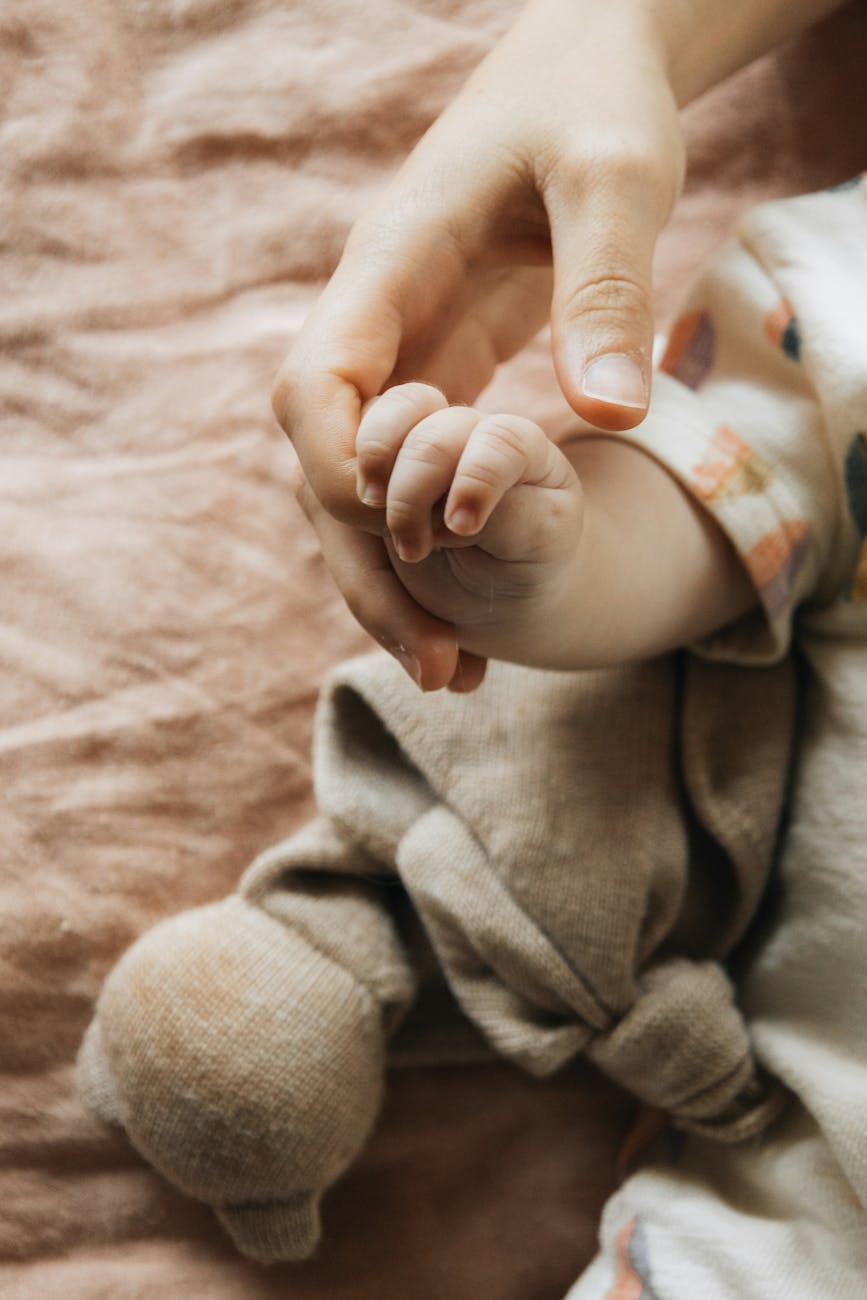
From his very first months, the baby explores the world through his senses and movements.
Even before being able to move around, he discovers his surroundings with his hands. Learning to grasp an object is a major milestone in psychomotor development: each movement prepares for the next, leading to precise and voluntary manipulation.
At first, the newborn shows the grasping reflex: when you touch his palm, his fingers automatically close. Around two or three months, he briefly holds an object that touches his hand, without meaning to and without being able to let go. Gradually, this reflex gives way to voluntary movements.
Between four and six months, he begins to reach for what he sees — hand-eye coordination appears. His grasp is still global, using the palm and fingers, and objects often end up… in his mouth! That’s his way of exploring textures, shapes, and temperatures.
Around seven to nine months, he learns to release an object intentionally and to transfer it from one hand to the other without dropping it. These small gestures show that his hands are becoming more skillful and that both hemispheres of his brain are starting to work together.
Around ten to eleven months, the fine pincer grasp between thumb and index finger emerges: he can handle small objects and turn pages. Shortly after, his two hands begin to work in coordination — one supports while the other acts. He can then hold a cup, catch a ball, or open a box.
Grasping an object is much more than a simple gesture. It means learning to coordinate his gaze, muscle tone, hands, and attention. By letting the baby touch, handle, pour, stack, and tip things over, we help him develop his curiosity, motor skills, and self-confidence.
Margaux Gaudin
LIVE PSYCHOMOT
Articles sur le développement psychomoteur
 LIVE PSYCHOMOT