Quand un bébé commence à tenir sa cuillère et à manger seul, il franchit une étape importante dans son développement. Ce geste marque le progrès de sa motricité fine, c’est-à-dire sa capacité à faire des mouvements précis avec ses mains et ses doigts.
Ce que cela signifie :
- Le bébé apprend à coordonner ses gestes pour tenir un objet correctement.
- Il développe la coordination entre ses yeux et ses mains.
- Il gagne en autonomie et en confiance.
À quel âge cela arrive :
- Vers 12 mois, bébé commence à vouloir utiliser la cuillère, souvent en jouant avec.
- Entre 18 et 24 mois, il devient plus précis et peut manger seul de petites quantités sans trop renverser.
Ce que l’enfant apprend :
- À se concentrer pour guider la cuillère jusqu’à sa bouche
- À gérer ses mouvements pour ne pas tout faire tomber
- À être fier de faire seul, comme les grands
Comment l’aider :
- Proposer des cuillères adaptées à ses petites mains
- Le laisser faire, même s’il se salit
- Manger avec lui pour qu’il puisse vous imiter
- Être patient et l’encourager
Ce moment, parfois un peu salissant, est aussi un vrai moment de progrès. Chaque tentative, même maladroite, fait partie de l’apprentissage. C’est un petit pas vers une plus grande autonomie.
Marion Bonvarlet
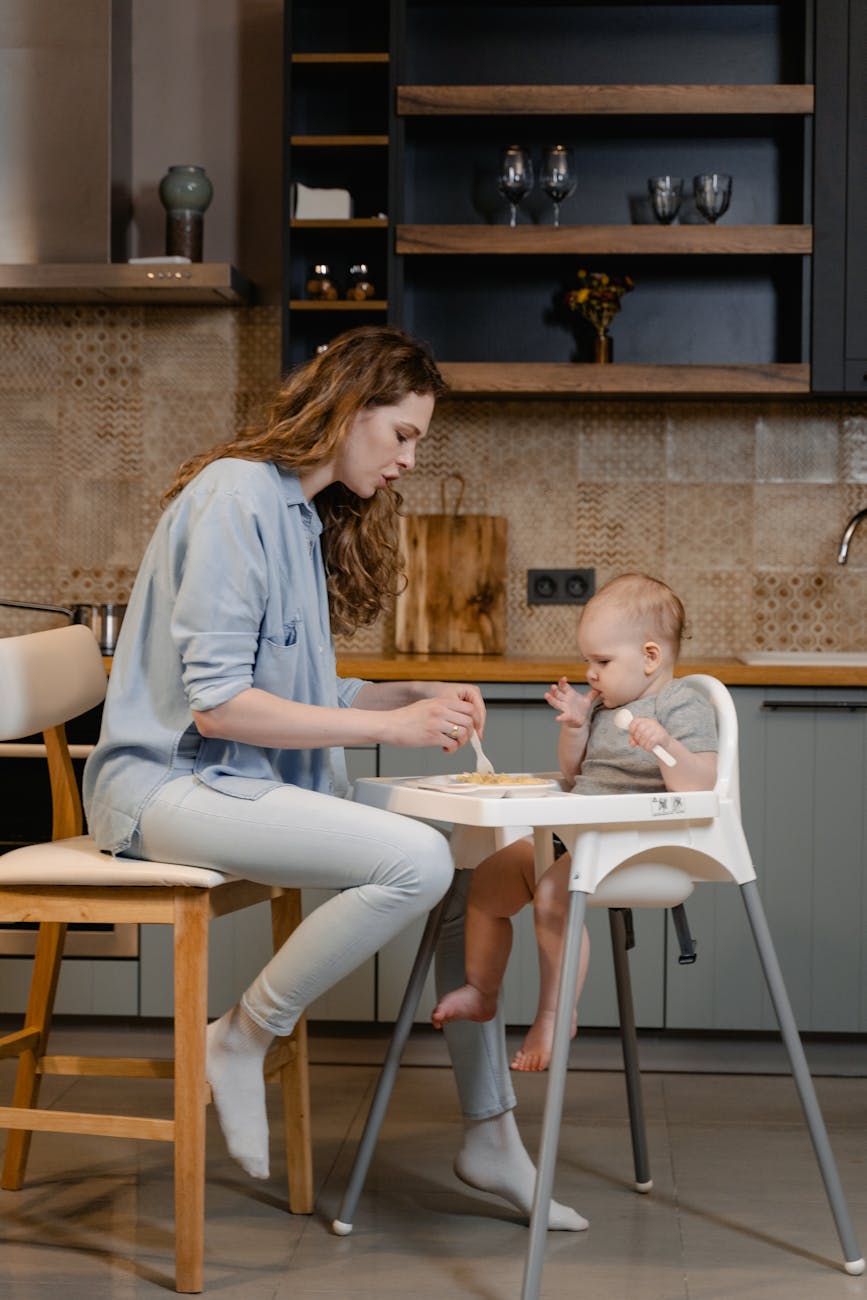
When a baby starts holding a spoon and eating on their own, they reach an important milestone in their development.
This action marks progress in their fine motor skills, meaning their ability to make precise movements with their hands and fingers.
What it means:
- The baby is learning to coordinate their movements to hold an object properly.
- They are developing hand-eye coordination.
- They are gaining autonomy and confidence.
When it happens:
- Around 12 months, the baby begins to want to use a spoon, often by playing with it.
- Between 18 and 24 months, they become more precise and can eat small amounts on their own without spilling too much.
What the child learns:
- To focus in order to guide the spoon to their mouth
- To control their movements to avoid dropping everything
- To feel proud of doing things on their own, like grown-ups
How to help them:
- Offer spoons adapted to their small hands
- Let them try, even if they get messy
- Eat with them so they can imitate you
- Be patient and encourage them
This moment, though sometimes a bit messy, is truly a moment of progress. Every attempt, even a clumsy one, is part of the learning process. It’s a small step toward greater independence.
Marion Bonvarlet
LIVE PSYCHOMOT
Articles sur le développement psychomoteur
 LIVE PSYCHOMOT