En psychomotricité, nous accordons une attention particulière à la posture de l’enfant lorsqu’il écrit ou travaille à table. Une bonne assise favorise la tenue de l’axe corporel, libère les gestes fins et soutient la concentration.
La posture idéale ? Les pieds bien à plat (au sol ou sur un support), les genoux fléchis à 90°, et les fesses avancées sur la chaise, sans être calées au fond, pour éviter l’enroulement du dos et favoriser un bon ancrage. La table doit arriver à hauteur de ventre. Au début de l’apprentissage, il est tout à fait normal que le buste touche légèrement la table : cela offre un appui supplémentaire aux enfants dont la posture est encore en construction.
Le dos doit rester droit mais détendu, la tête dans l’alignement du tronc, ni trop penchée, ni tournée. La main qui n’écrit pas doit être posée à plat sur la feuille pour la stabiliser. Jusqu’à environ 6 ans, la feuille est placée droite, puis progressivement orientée légèrement en biais, dans le prolongement de l’avant-bras qui écrit. L’utilisation d’un plan incliné peut également favoriser une meilleure posture du poignet et du regard.
Selon la morphologie de l’enfant, une table et une chaise à hauteur adaptée (comme en école maternelle) sont idéales. À défaut, des aménagements simples sont possibles : chaise évolutive type Tripp Trapp, coussin réhausseur, petit tabouret sous les pieds… Certains enfants ont également besoin de mouvement pour se réguler : dans ce cas, un coussin d’air peut remplacer le réhausseur.
N’oublions pas : une bonne posture est déjà une aide précieuse pour l’apprentissage !
Margaux Gaudin
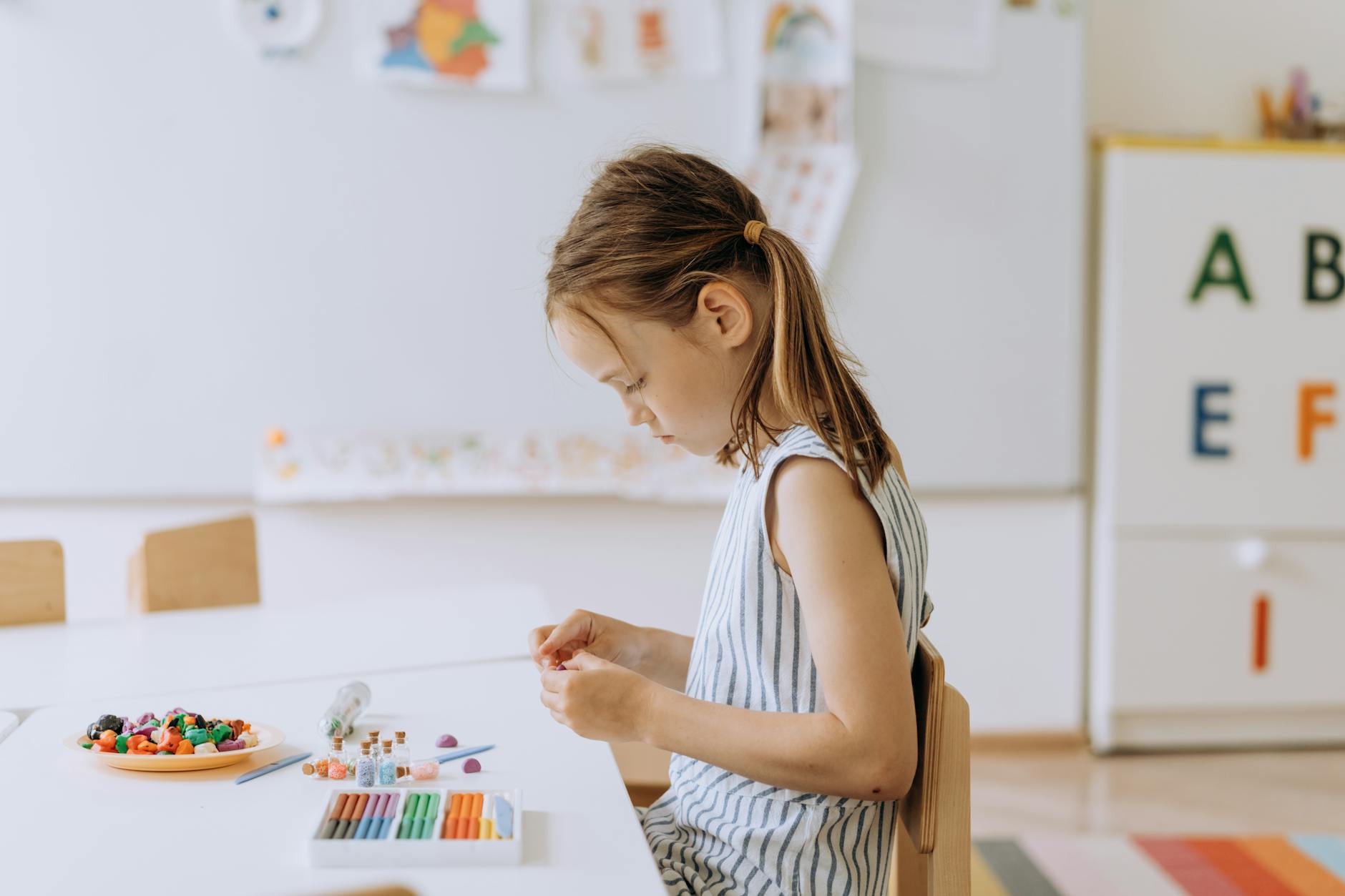
In psychomotricity, we pay particular attention to a child’s posture when writing or working at a table.
A good sitting position supports proper body alignment, frees up fine motor movements, and enhances concentration.
What is the ideal posture?
Feet flat on the floor (or on a footrest), knees bent at 90°, and the hips positioned forward on the chair — not leaning back — to avoid slouching and to encourage a stable base. The table should be at belly height. In the early stages of learning, it’s perfectly normal for the child’s torso to touch the table slightly: this provides extra support while their posture is still developing.
The back should remain straight but relaxed, and the head should be aligned with the trunk — not tilted or turned. The non-writing hand should rest flat on the paper to keep it steady. Until around age 6, the paper is usually placed straight; then gradually, it is positioned slightly at an angle, in line with the writing forearm. A sloped writing surface can also help support better wrist and eye positioning.
Depending on the child’s body shape, a properly sized table and chair (as found in preschool settings) are ideal.
If those aren’t available, simple adjustments can be made: an adjustable chair like the Tripp Trapp, a booster cushion, a small footstool… Some children also need movement to self-regulate — in such cases, an air cushion can be used instead of a booster.
Let’s not forget: good posture is already a valuable aid in the learning process!
Margaux Gaudin
LIVE PSYCHOMOT
Articles sur le développement psychomoteur
 LIVE PSYCHOMOT