« 1, 2, 3… je vais te trouver ! » Ce jeu classique du cache-cache, si simple en apparence, est en réalité une activité pleine de richesses pour le développement de l’enfant, à la fois sur les plans psychomoteur, cognitif et relationnel.
En jouant à cache-cache, l’enfant travaille d’abord une notion essentielle : la permanence de l’objet, c’est-à-dire comprendre que quelqu’un ou quelque chose existe toujours, même s’il n’est plus visible. Il développe aussi ses capacités motrices en adaptant ses mouvements aux contraintes de l’espace : ramper sous une table, grimper derrière un canapé ou se glisser dans un petit espace. Ces expériences l’aident à mieux prendre conscience de son corps dans l’espace.
Ce jeu est également une excellente activité pour le cerveau. L’enfant doit réfléchir pour trouver des cachettes, anticiper les déplacements de l’autre, imaginer où l’autre pourrait se cacher ou planifier comment rester introuvable. Tout cela l’aide à développer son attention, sa planification et sa capacité à résoudre des problèmes.
Jouer à cache-cache, c’est aussi partager un moment riche en émotions et interactions, que ce soit avec des pairs ou des adultes. La joie d’être trouvé, l’excitation de chercher ou encore la surprise d’une cachette bien choisie permettent à l’enfant d’explorer et d’apprendre à gérer ses émotions, tout en renforçant les liens avec les autres.
Enfin, ce jeu aide l’enfant à intégrer des repères spatiaux comme dedans/dehors, dessus/dessous ou proche/loin. Adaptable à tous les âges et à tous les niveaux, il reste toujours amusant, ce qui le rend idéal pour les petits comme les plus grands.
Margaux Gaudin
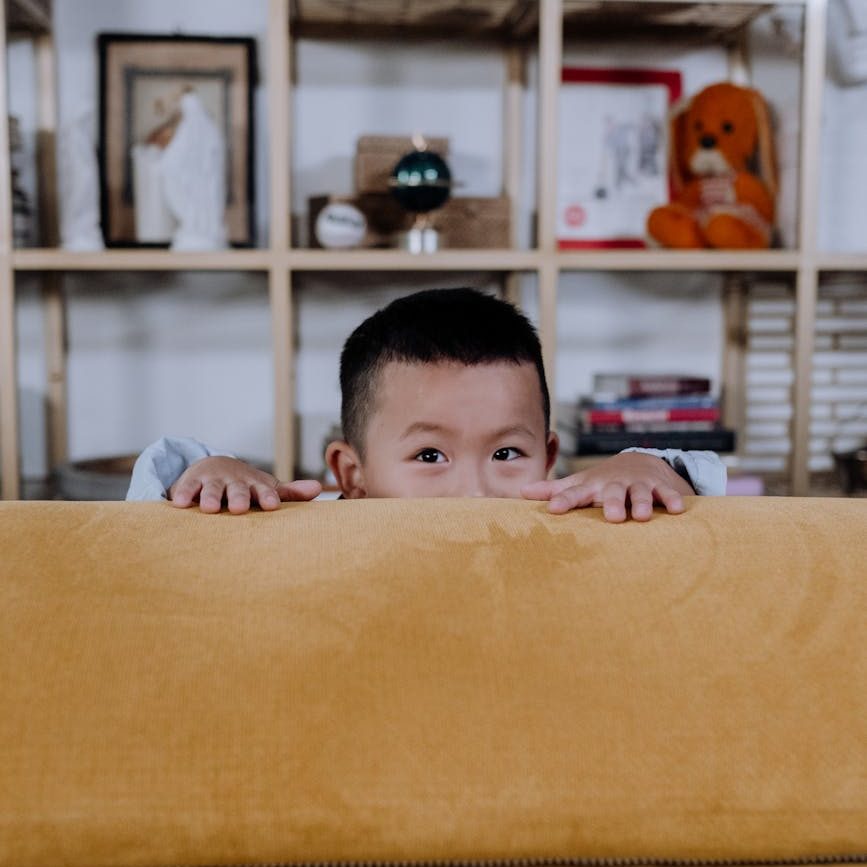
« 1, 2, 3… I’m going to find you! » This classic game of hide-and-seek, simple as it may seem, is actually a rich activity for a child’s development, encompassing motor, cognitive, and social aspects.
When playing hide-and-seek, the child first works on an essential concept: object permanence, which means understanding that someone or something still exists, even if it’s no longer visible. The child also develops their motor skills by adapting their movements to spatial constraints: crawling under a table, climbing behind a couch, or slipping into a small space. These experiences help them become more aware of their body in space.
This game is also an excellent activity for the brain. The child needs to think to find hiding spots, anticipate the other person’s movements, imagine where they could hide, or plan how to stay undetected. All of this helps develop their attention, planning, and problem-solving skills.
Playing hide-and-seek is also an opportunity to share an emotionally rich moment, whether with peers or adults. The joy of being found, the excitement of seeking, or the surprise of a well-chosen hiding spot allows the child to explore and learn to manage their emotions, while strengthening bonds with others.
Finally, this game helps the child integrate spatial concepts like inside/outside, above/below, or near/far. Adaptable to all ages and levels, it remains enjoyable, making it ideal for both young children and older ones.
Margaux Gaudin
LIVE PSYCHOMOT
Articles sur le développement psychomoteur
 LIVE PSYCHOMOT