À tous les parents qui ont un enfant un peu trop dynamique, voici un outil indispensable pour vous : le coussin d’air. Incontournable dans toutes les salles de psychomotricité, j’espère qu’il trouvera aussi sa place un jour dans les salles de classe. Le coussin d’air, également appelé coussin de proprioception (capacité du corps à percevoir sa position et ses mouvements dans l’espace), est un dispositif gonflable, souvent texturé pour ajouter une stimulation tactile. Placé sur la chaise de l’enfant en séance ou en classe, il provoque des micromouvements qui empêchent l’enfant de se sentir passif et favorisent ainsi son attention.
Le coussin d’air est léger et facile à transporter, ce qui permet de l’utiliser à différents endroits. À la maison ou en classe, ce coussin peut aider vos enfants à rester assis plus longtemps. En séance de psychomotricité, il est également utilisé pour renforcer les capacités d’équilibration. Lorsque l’enfant se tient debout sur le coussin, il doit constamment ajuster sa posture pour maintenir son équilibre, ce qui stimule les capteurs proprioceptifs dans les muscles et les articulations. J’utilise régulièrement le coussin d’air en demandant aux enfants de rester en équilibre dessus pendant un certain temps. Nous réalisons des échanges de balles de tailles et de textures variées, et nous travaillons l’équilibre avec les yeux fermés ou en se tenant sur un pied.
Le coussin d’air est un outil simple mais puissant qui offre de nombreux bénéfices tant dans la vie quotidienne que dans les séances de rééducation. Chers parents, enseignants et collègues psychomotriciens, je vous encourage vivement à intégrer ce merveilleux outil dans vos pratiques pour favoriser le développement et le bien-être des enfants et des patients.
Bonus : Bien que le focus soit sur les enfants, le coussin d’air peut aussi être bénéfique pour les adultes. Utilisé au bureau, il peut améliorer la posture et réduire les douleurs lombaires en s’asseyant dessus.
Margaux Gaudin
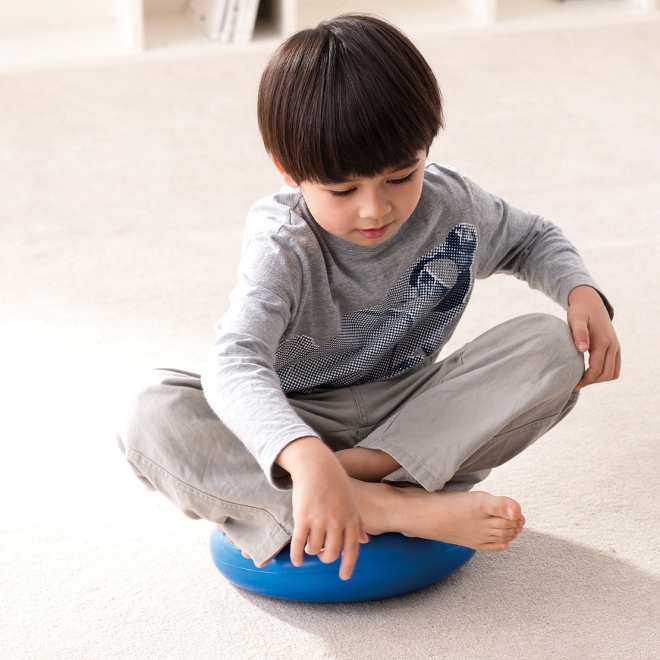
To all parents with a somewhat overly energetic child, here is an indispensable tool for you: the air cushion. Ubiquitous in all psychomotricity rooms, I hope it will also find its place one day in classrooms. The air cushion, also known as a proprioception cushion (the body’s ability to perceive its position and movements in space), is an inflatable device, often textured to add tactile stimulation. Placed on the child’s chair during a session or in class, it induces micromovements that prevent the child from feeling passive and thus promotes their attention.
The air cushion is lightweight and easy to transport, allowing it to be used in different locations. At home or in class, this cushion can help your children stay seated longer. In psychomotricity sessions, it is also used to enhance balancing skills. When the child stands on the cushion, they must constantly adjust their posture to maintain balance, which stimulates the proprioceptive sensors in the muscles and joints. I regularly use the air cushion by asking children to balance on it for a certain period. We perform ball exchanges of various sizes and textures, and we work on balance with eyes closed or standing on one foot.
The air cushion is a simple yet powerful tool that offers numerous benefits in both daily life and rehabilitation sessions. Dear parents, teachers, and fellow psychomotricians, I strongly encourage you to incorporate this wonderful tool into your practices to promote the development and well-being of children and patients.
Bonus: Although the focus is on children, the air cushion can also be beneficial for adults. Used at the office, it can improve posture and reduce lower back pain when sitting on it.
Margaux Gaudin
LIVE PSYCHOMOT
Articles sur le développement psychomoteur
 LIVE PSYCHOMOT