L’Apprentissage des Escaliers c’est un Petit Pas pour Bébé et un Grand Bond pour son Développement !
Monter et descendre les escaliers, c’est un peu comme l’Everest pour un tout-petit. Au début, c’est impressionnant, parfois effrayant, mais c’est aussi une étape clé dans son développement psychomoteur. Alors, à quel âge un enfant devient-il un expert en escalier ? Et comment l’aider à devenir un alpiniste en herbe sans se transformer en garde du corps 24/7 ? On vous dit tout !
- À quel âge commence-t-il à grimper ?
Chaque enfant évolue à son rythme, mais en général :
– Vers 12-18 mois : Il commence à monter les marches… à quatre pattes ! La descente est encore compliquée et demande souvent l’aide d’un adulte.
– Vers 18-24 mois : Il tente de monter debout, en s’accrochant solidement à la rampe ou aux barreaux d’un escalier sécurisé.
– Vers 2-3 ans : Il commence à alterner ses pieds sur chaque marche en montant (mais pas forcément en descendant).
– Vers 3-4 ans : Il devient un pro et gère l’escalier en toute autonomie, souvent avec une démarche plus fluide.
- Ce qui se passe dans son petit corps et son cerveau
L’apprentissage des escaliers fait appel à plusieurs compétences :
– Équilibre et coordination : Pour réussir à monter et descendre, il doit apprendre à gérer son centre de gravité et à coordonner ses jambes et ses bras.
– Force musculaire : Ses jambes doivent être suffisamment musclées pour supporter son poids.
– Conscience spatiale : Il doit comprendre la hauteur des marches, la distance et l’alternance des pieds.
– Confiance en soi : Chaque escalier vaincu est une victoire qui booste son assurance !
- Comment l’aider à maîtriser l’art de l’escalier ?
– Sécurisez l’environnement : Installez une barrière en haut et en bas des escaliers pour éviter les cascades imprévues.
– Montrez l’exemple : Montez et descendez doucement avec lui en lui tenant la main au début.
– Apprenez-lui la technique : Encouragez-le à poser un pied après l’autre sur chaque marche et à bien s’accrocher.
– Laissez-le expérimenter : Sous surveillance, laissez-le grimper et descendre seul pour qu’il développe ses compétences.
– Jouez avec lui : Transformez l’apprentissage en jeu, avec des petits défis comme « saute cette marche » ou « monte comme un crabe ».
Patience et encouragements : les maîtres-mots !
Comme pour toute acquisition motrice, la clé, c’est d’accompagner votre enfant sans le brusquer. Chaque enfant évolue à son propre rythme, et il finira par maîtriser les escaliers à force d’essais…
Marion Bonvarlet
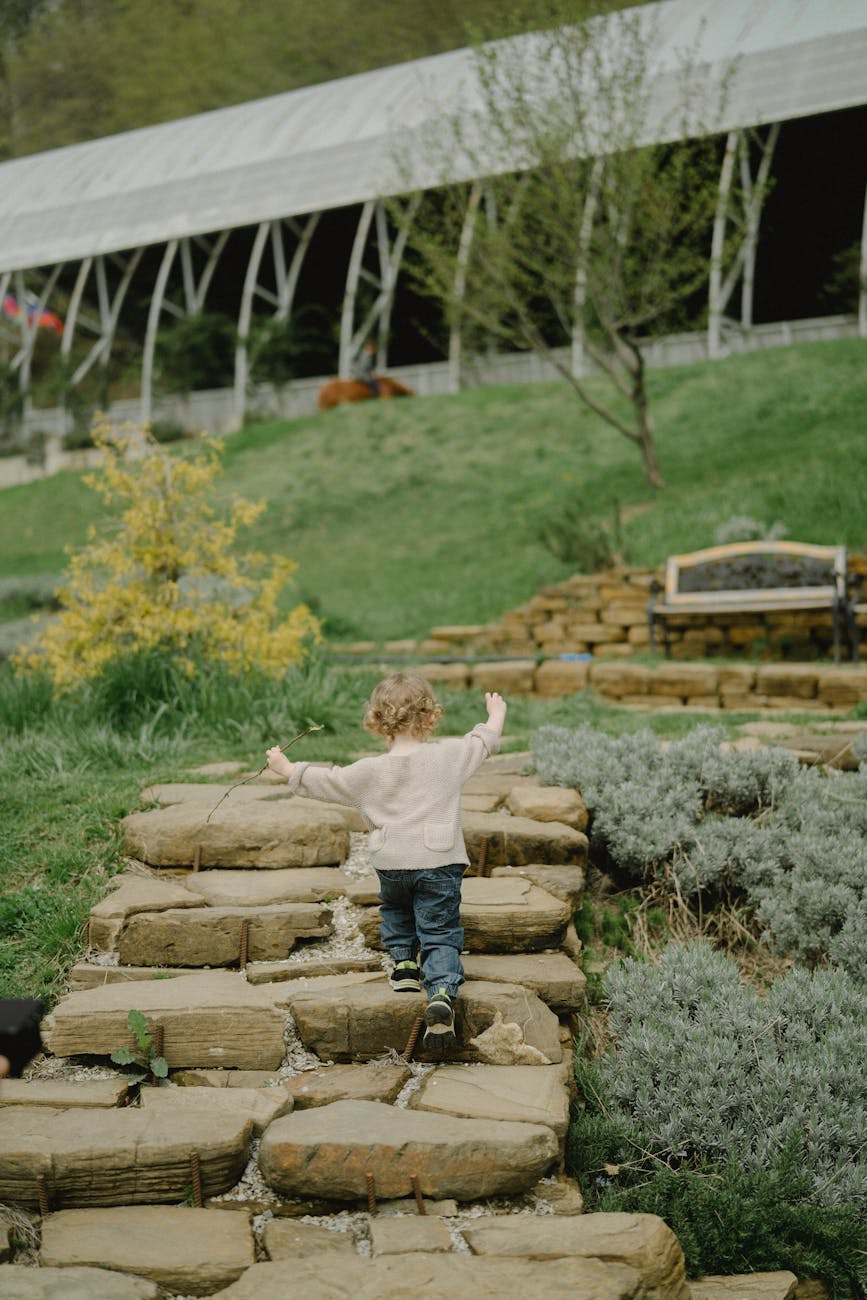
Learning to Climb Stairs is a Small Step for Baby and a Giant Leap for Development!
Climbing up and down the stairs is like an Everest challenge for a toddler. At first, it’s impressive, sometimes scary, but it’s also a key milestone in their psychomotor development. So, at what age does a child become a stair-climbing expert? And how can you help them become a little mountaineer without turning into a 24/7 bodyguard? Here’s everything you need to know!
At What Age Do They Start Climbing?
- Every child develops at their own pace, but generally:
- Around 12-18 months: They start climbing stairs… on all fours! Going down is still tricky and often requires adult assistance.
- Around 18-24 months: They attempt to climb while standing, holding tightly onto the railing or bars of a secure staircase.
- Around 2-3 years: They begin alternating feet on each step when going up (though not necessarily when coming down).
- Around 3-4 years: They become pros, handling stairs independently with a more fluid motion.
2. What’s Happening in Their Little Body and Brain?
Learning to climb stairs involves several skills:
- Balance and coordination: They need to control their center of gravity and coordinate their legs and arms.
- Muscle strength: Their legs must be strong enough to support their weight.
- Spatial awareness: They need to understand the height of steps, distances, and how to alternate feet.
- Self-confidence: Every conquered staircase is a victory that boosts their confidence!
3. How to Help Them Master the Art of Stairs?
- Secure the environment: Install a safety gate at the top and bottom of the stairs to prevent unexpected tumbles.
- Lead by example: Go up and down slowly with them, holding their hand at first.
- Teach them technique: Encourage them to place one foot after the other on each step and hold on properly.
- Let them experiment: Under supervision, allow them to climb and descend alone to develop their skills.
- Make it fun: Turn learning into a game with small challenges like “jump this step” or “climb like a crab.”
Patience and Encouragement: The Key Words!
Like any motor skill, the key is to guide your child without rushing them. Every child progresses at their own pace, and with practice, they will master stairs in no time!
Marion Bonvarlet
LIVE PSYCHOMOT
Articles sur le développement psychomoteur
 LIVE PSYCHOMOT