Le Jenga, ce classique des jeux de société, trouve une place de choix sous le sapin. Il consiste à construire une tour à l’aide de blocs en bois, puis de retirer ces blocs un par un sans faire tomber l’ensemble.
D’un point de vue psychomoteur, le Jenga est un trésor pour travailler la motricité fine : manipuler délicatement les blocs demande précision et dextérité, ainsi que la coordination oeil-main car il faut synchroniser son regard avec ses mouvements pour retirer ou repositionner les blocs avec soin. En plus, ce jeu sollicite le contrôle tonique, en apprenant à l’enfant à ajuster la force et la finesse de ses gestes pour éviter de faire vaciller la tour.
Sur le plan cognitif, le Jenga est un excellent exercice pour renforcer l’attention et la planification. Chaque joueur doit évaluer la stabilité de la tour, anticiper les conséquences de ses gestes et choisir stratégiquement le bloc à retirer. En plus, le Jenga aide à la gestion des émotions : qu’il s’agisse de garder son calme quand la tour bouge ou de gérer sa frustration lorsqu’elle s’effondre. Joué en famille, ce jeu devient un outil pour apprendre à respecter les règles, attendre son tour et coopérer dans une ambiance ludique. Le Jenga peut être adapté pour répondre à différents besoins. Par exemple, on peut utiliser des blocs colorés et demander à l’enfant de trier par couleur, ou encore réaliser des algorithmes à 2 couleurs, puis 3 couleurs, en 2D puis en 3D. On peut aussi ajouter des défis supplémentaires, comme retirer les blocs à l’aide de pinces pour travailler encore davantage la précision.
En psychomotricité, le Jenga est un outil précieux pour travailler des objectifs variés comme la régulation tonique, le contrôle moteur et l’attention, dans un cadre stimulant et ludique. Et à la maison, c’est un merveilleux prétexte pour partager un moment de complicité avec votre enfant tout en soutenant son développement. Alors, pourquoi ne pas glisser un Jenga au pied du sapin cette année ?
Marion Bonvarlet
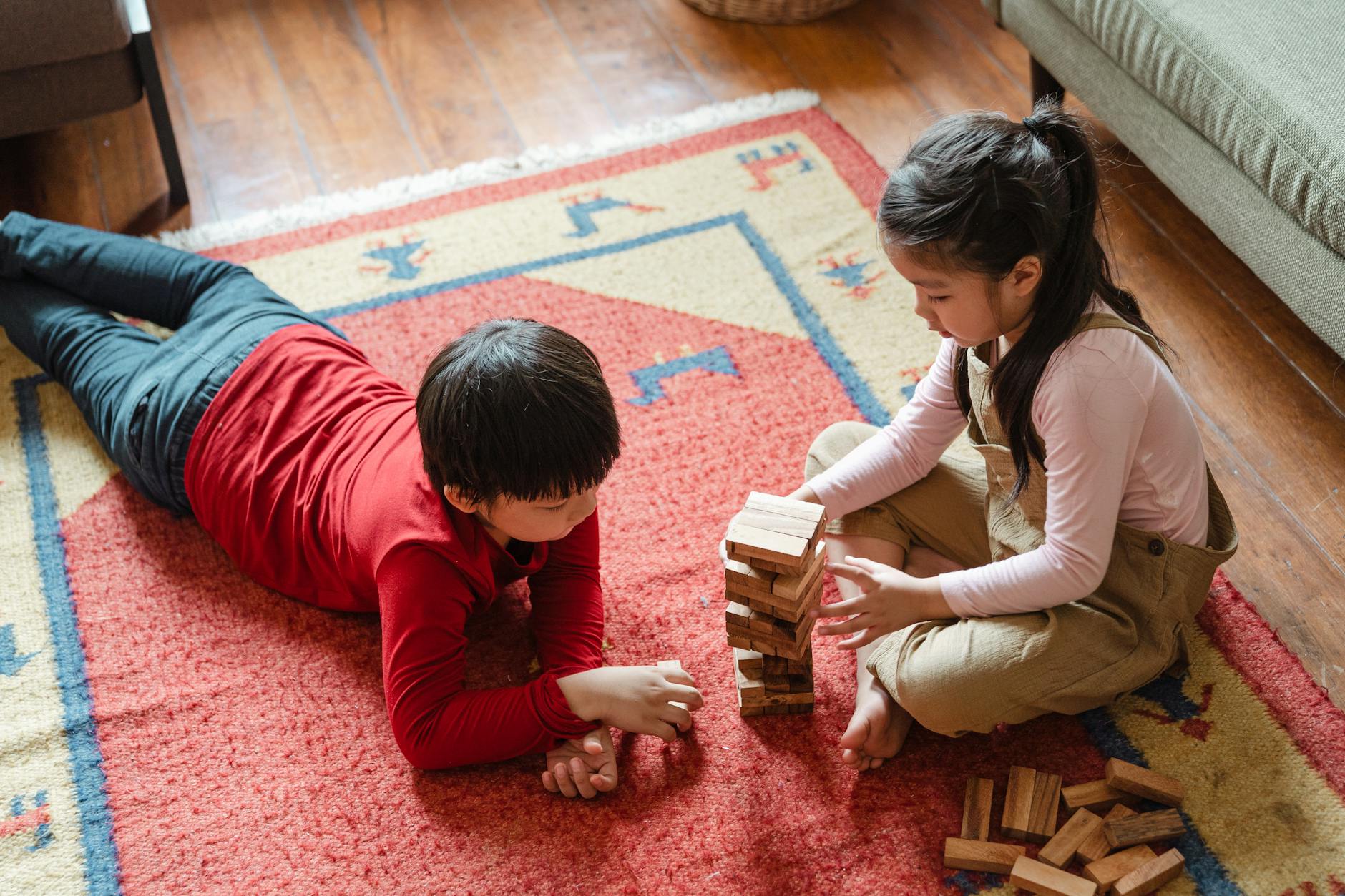
Jenga, that classic board game, finds a special place under the Christmas tree. The game consists of building a tower with wooden blocks and then removing them one by one without causing the whole structure to collapse. From a psychomotor perspective, Jenga is a treasure for developing fine motor skills: carefully handling the blocks requires precision and dexterity, as well as hand-eye coordination since players must synchronize their gaze with their movements to carefully remove or reposition the blocks. Additionally, this game encourages tonic control, teaching children to adjust the force and delicacy of their movements to avoid destabilizing the tower.
Cognitively, Jenga is an excellent exercise to strengthen attention and planning skills. Each player must assess the stability of the tower, anticipate the consequences of their actions, and strategically choose which block to remove. It also helps with emotional regulation, whether it’s maintaining composure when the tower wobbles or managing frustration when it falls.
When played with family, the game becomes a tool to learn how to follow rules, take turns, and cooperate in a fun environment. Jenga can be adapted to meet different needs. For example, colored blocks can be used, and children can sort them by color, or players can create patterns with two colors, then three, in both 2D and 3D. Additional challenges can be introduced, such as using tongs to remove blocks, further honing precision skills.
In psychomotor therapy, Jenga is a valuable tool to work on a variety of objectives such as tonic regulation, motor control, and attention, all within a stimulating and playful context. At home, it’s a wonderful excuse to share a bonding moment with your child while supporting their development. So, why not slip a Jenga set under the tree this year?
Marion Bonvarlet
LIVE PSYCHOMOT
Articles sur le développement psychomoteur
 LIVE PSYCHOMOT