Beaucoup de métiers du paramédical sont associés aux animaux et notamment aux chevaux comme avec l’équithérapie, mais plus largement le contact des enfants avec les animaux est un outil précieux dans le développement psychomoteurs, voici pourquoi en 5 points :
- Gestion des distances : distance avec l’animal, recul de ce dernier ou de l’enfant aux mouvements et réactions de chacun, approche progressive
- Gestion du rythme : attendre que l’animal accepte une caresse, caresser/toucher doucement, prendre son temps, gérer les réactions un peu vives et donc les changements soudains de rythme
- Gestion de la régulation tonique : caresser doucement l’animal, ne pas appuyer trop fort, ressentir son tonus, les crispations et tensions et son adaptation à l’enfant
- Compréhension d’un autre schéma corporel : emplacement des pattes, du ventre, du dos, de la tête, des oreilles, des yeux, comparer par rapport à son propre corps
- Gestion des émotions : un des points les plus importants car au contact de l’animal et donc par le dialogue tonique, l’enfant découvre des émotions (peur, apaisement, joie…) et se règle petit à petit par l’expérience sensori-motrice que le toucher lui procure
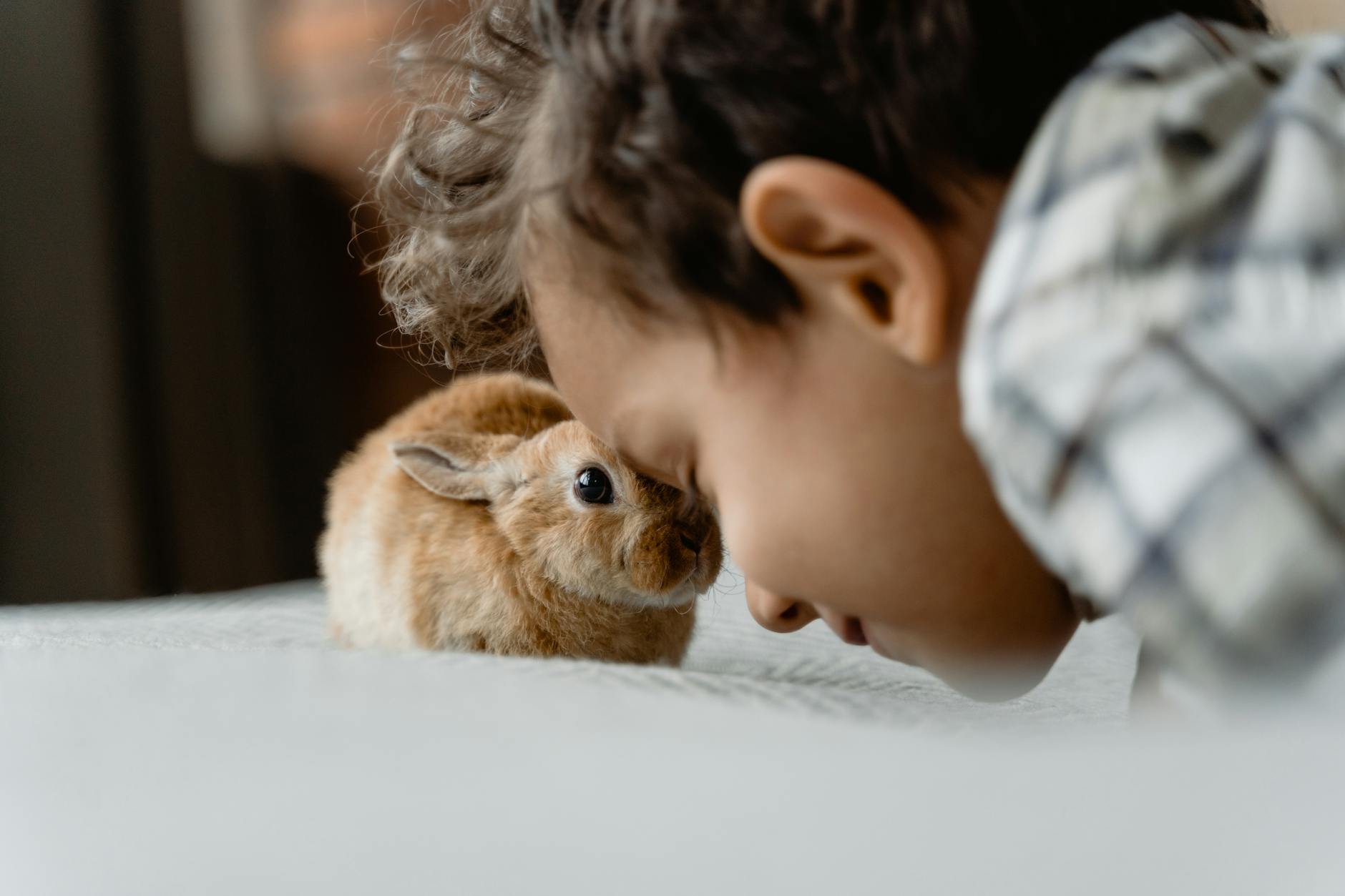
Many paramedical professions are associated with animals, notably horses, such as in equitherapy. However, more broadly, the contact children have with animals is a valuable tool in psychomotor development. Here’s why in 5 points:
- Distance Management: Understanding the distance between the child and the animal, observing reactions and movements, and gradually approaching to establish trust.
- Rhythm Management: Learning to wait for the animal to accept interaction, approaching gently, taking time, and adapting to sudden changes in movement.
- Tonic Regulation Management: Sensitively interacting with the animal, avoiding applying too much pressure, understanding its muscle tone, tension, and adapting to the child’s needs.
- Understanding Different Body Schemas: Learning about the animal’s body parts and comparing them to one’s own, such as legs, belly, back, head, ears, and eyes.
- Emotional Management: Perhaps the most important aspect, as children discover and regulate their emotions through tactile experiences with animals, experiencing feelings like fear, calmness, and joy through tactile interactions.
Marion Bonvarlet
LIVE PSYCHOMOT
Articles sur le développement psychomoteur
 LIVE PSYCHOMOT