La draisienne, ce vélo sans pédales conçu pour les petits, est un formidable outil pour accompagner le développement psychomoteur de l’enfanten lui permettant d’expérimenter le déséquilibre tout en explorant son environnement.
Dès 2 ans, l’enfant peut s’initier à la draisienne et ainsi développer son équilibre dynamique. Contrairement aux vélos avec roulettes, elle l’incite à ajuster son tonus musculaire et sa posture pour maintenir sa stabilité tout en étant en mouvement. Cette expérience motrice favorise une transition naturelle vers le vélo classique, souvent sans passer par l’étape des petites roues.
L’utilisation de la draisienne sollicite également la motricité globale, en renforçant la musculature des jambes et en favorisant la coordination entre les membres supérieurs et inférieurs. L’enfant apprend à se propulser en alternant les mouvements de ses jambes, tout en orientant le guidon avec ses mains pour ajuster ses trajectoires et freiner, ce qui stimule aussi la coordination œil-main. Il explore l’espace et affine sa perception des distances et des directions, des compétences essentielles à son développement psychomoteur.
Au-delà des aspects moteurs, la draisienne joue un rôle clé dans le développement de la confiance en soi. En expérimentant ses propres capacités, l’enfant prend du plaisir à se déplacer de manière autonome, ce qui renforce son sentiment de compétence et son envie d’explorer.
Pour une utilisation optimale, il est essentiel de choisir une draisienne adaptée à la taille de l’enfant, de privilégier un environnement sécurisé et d’encourager le port du casque. Introduite progressivement et dans un cadre ludique, elle devient un excellent support pour grandir en mouvement !
Margaux Gaudin
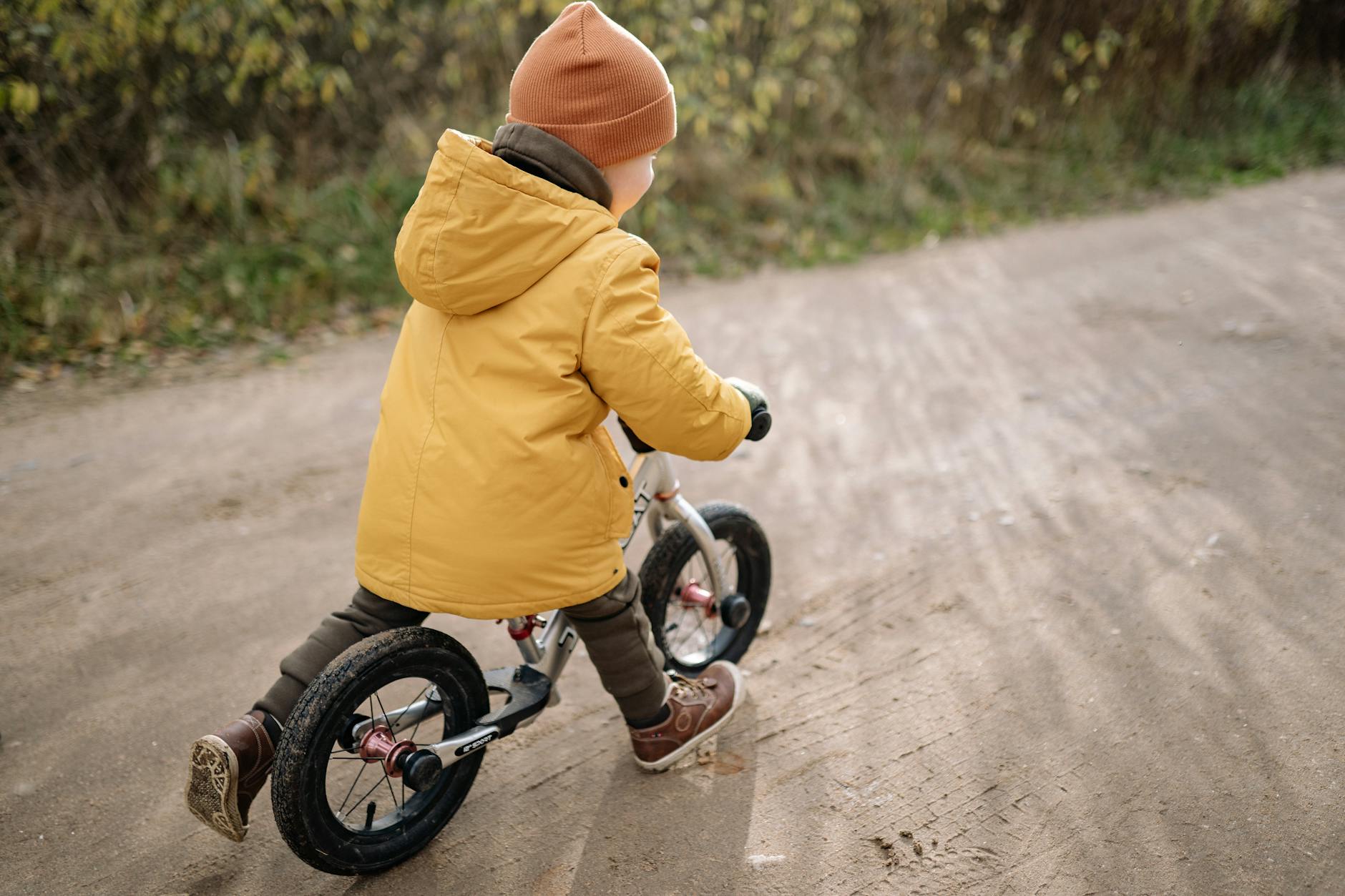
The balance bike, a pedal-less bicycle designed for young children, is a fantastic tool to support the development of a child’s psychomotor skills, allowing them to experience imbalance while exploring their surroundings.
From the age of 2, a child can start using a balance bike, helping them develop dynamic balance. Unlike bikes with training wheels, the balance bike encourages the child to adjust their muscle tone and posture to maintain stability while in motion. This motor skill experience facilitates a natural transition to a regular bike, often without the need for training wheels.
Using a balance bike also engages global motor skills by strengthening the leg muscles and improving coordination between the upper and lower limbs. The child learns to propel themselves by alternating the movements of their legs while steering with their hands to adjust their direction and brake, which also stimulates hand-eye coordination. They explore space and refine their sense of distance and direction—skills that are essential for their psychomotor development.
Beyond motor skills, the balance bike plays a key role in building self-confidence. By testing their own abilities, the child enjoys moving independently, which strengthens their sense of competence and desire to explore.
For optimal use, it’s important to choose a balance bike that is the right size for the child, ensure a safe environment, and encourage the use of a helmet. When introduced gradually and in a playful setting, the balance bike becomes an excellent tool for growing through movement!
Margaux Gaudin
LIVE PSYCHOMOT
Articles sur le développement psychomoteur
 LIVE PSYCHOMOT