Pli après pli, l’origami invite l’enfant à transformer une simple feuille de papier en une création. Mais au-delà du plaisir de créer, cette activité manuelle est une formidable opportunité de développement psychomoteur.
En psychomotricité, nous l’utilisons régulièrement pour travailler la motricité fine et la dextérité manuelle : il faut saisir, plier avec précision, appuyer avec la bonne force, coordonner ses deux mains, ajuster son geste… autant de compétences précieuses pour écrire, boutonner un manteau ou découper avec des ciseaux.
L’origami est aussi une activité structurante. Chaque pli suit une succession d’étapes, dans un ordre bien précis. L’enfant apprend ainsi à se repérer dans le temps, à suivre une séquence logique, à se concentrer sur une tâche et à aller jusqu’au bout, même si c’est un peu difficile. Cela renforce son organisation mentale et sa persévérance.
C’est également un excellent exercice pour développer les compétences spatiales : comprendre les notions de symétrie, de pliage en diagonale ou en longueur, de haut et de bas, de face et de verso. Ce travail spatial est très utile dans les apprentissages scolaires (mathématiques, géométrie, lecture de plans, etc.) mais aussi dans la vie quotidienne.
L’origami peut s’adapter à chaque enfant : il existe des modèles très simples pour débuter, et d’autres plus complexes pour les plus aguerris. On peut aussi varier les consignes pour stimuler d’autres fonctions : utiliser un chronomètre pour ajouter une notion de vitesse d’exécution, ou placer le modèle à l’autre bout de la pièce avec un parcours à réaliser pour faire appel à la mémoire de travail.
L’origami est aussi un outil de valorisation, qui renforce la confiance en soi, la patience et le plaisir de faire par soi-même.
Alors, pourquoi ne pas vous y mettre à la maison ?
Margaux Gaudin
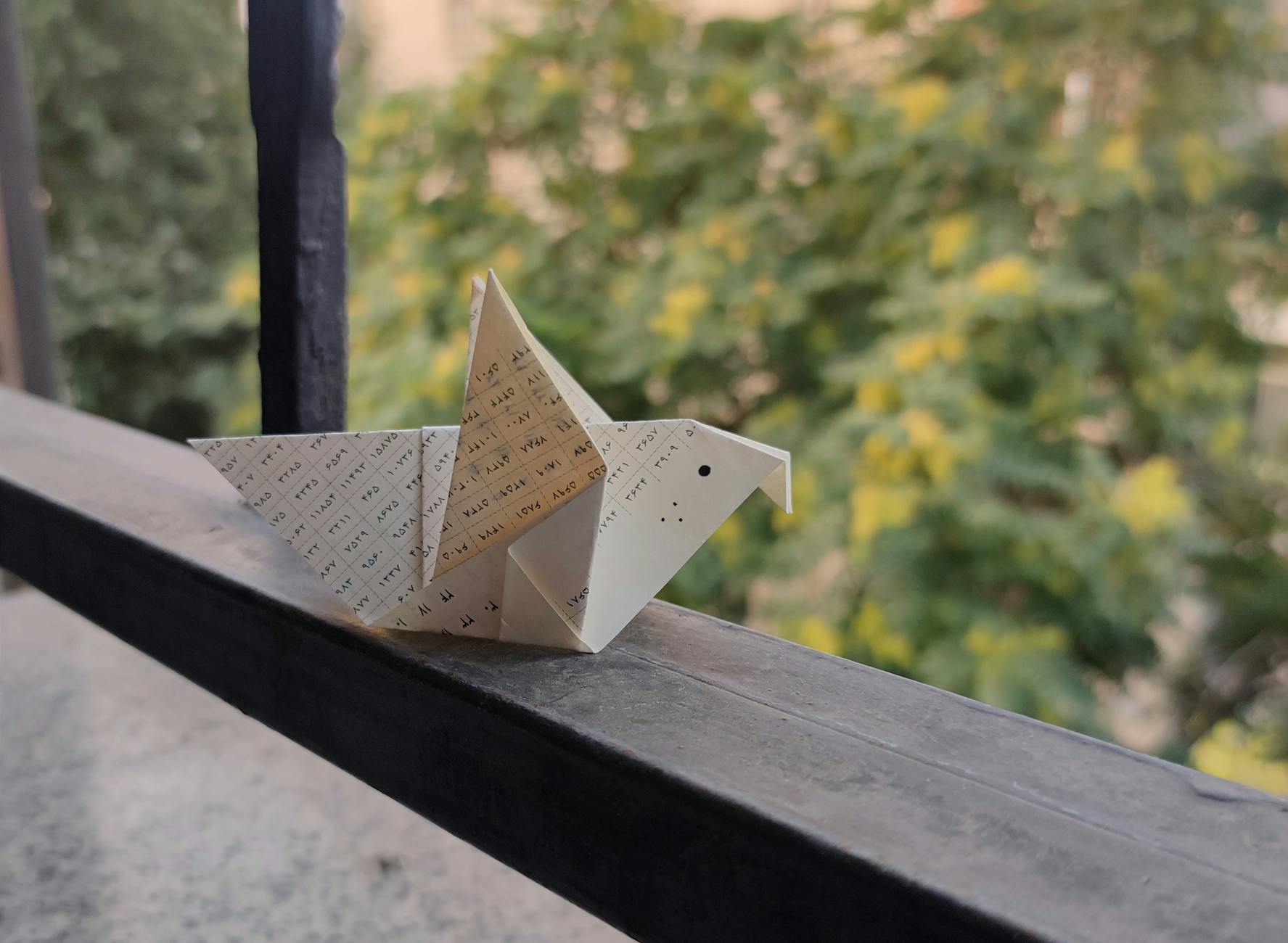
Fold after fold, origami invites children to transform a simple sheet of paper into a creation. But beyond the joy of making, this hands-on activity is a wonderful opportunity for psychomotor development.
In psychomotricity, we regularly use origami to work on fine motor skills and manual dexterity: children must grasp, fold precisely, press with the right amount of force, coordinate both hands, and adjust their movements — all essential skills for writing, buttoning a coat, or cutting with scissors.
Origami is also a structuring activity. Each fold follows a sequence of steps in a very specific order. In doing so, the child learns to orient themselves in time, to follow a logical sequence, to focus on a task, and to see it through, even if it’s a bit challenging. This helps strengthen their mental organization and perseverance.
It is also an excellent exercise for developing spatial skills: understanding concepts like symmetry, diagonal or lengthwise folding, top and bottom, front and back. This spatial work is very useful for school learning (math, geometry, map reading, etc.) as well as everyday life.
Origami can be adapted to every child: there are very simple models for beginners, and more complex ones for the more experienced. Instructions can also be varied to stimulate other functions: for example, using a timer to introduce a notion of speed, or placing the model at the other end of the room with an obstacle course to engage working memory.
Origami is also a tool for self-empowerment that boosts self-confidence, patience, and the joy of creating something with one’s own hands.
So, why not give it a try at home?
Margaux Gaudin
LIVE PSYCHOMOT
Articles sur le développement psychomoteur
 LIVE PSYCHOMOT