Mettre les objets à la bouche est un comportement universel chez le nourrisson et le jeune enfant. Du point de vue psychomoteur, il s’agit d’une étape fondamentale qui participe à la construction du développement global. Loin d’être un simple geste réflexe, cette exploration orale est un moyen riche et complexe pour découvrir le monde et construire son identité corporelle.
Dès les premiers mois de vie, la bouche est une zone privilégiée de perception. Elle est dotée d’une sensibilité tactile, thermique et gustative particulièrement développée. C’est donc par elle que l’enfant commence à établir ses premières expériences sensorielles. En portant un objet à sa bouche, il en découvre la texture, la température, la forme, parfois même la dureté. Ces informations constituent une base de données sensorielle qui va enrichir sa perception du monde.
Sur le plan psychomoteur, cette activité participe à la construction du schéma corporel. En explorant les objets avec sa bouche, l’enfant prend conscience des limites de son propre corps et différencie ce qui lui appartient de ce qui est extérieur. Ce processus est essentiel pour développer la sécurité intérieure et l’estime de soi.
Mettre à la bouche est également lié au développement de la coordination. Le nourrisson doit ajuster sa préhension, diriger sa main vers la bouche, et coordonner ses mouvements. Ce geste, répété des centaines de fois, renforce les liens entre perception, motricité et action. Il prépare aussi à des acquisitions ultérieures, comme l’alimentation autonome et même le langage, puisque la motricité orale est stimulée par ces expériences.
Enfin, du point de vue affectif, la bouche est aussi une zone d’apaisement. Sucer, mordiller ou mâchouiller permet à l’enfant de se rassurer, de réguler ses émotions et de retrouver une sécurité comparable à celle procurée par la succion au sein ou au biberon.
Ainsi, porter des objets à la bouche ne doit pas être vu comme une « mauvaise habitude », mais comme une étape naturelle, indispensable et bénéfique. Elle témoigne d’un développement harmonieux où le sensoriel, le moteur et l’affectif s’entremêlent pour aider l’enfant à grandir et explorer son environnement.
Marion Bonvarlet
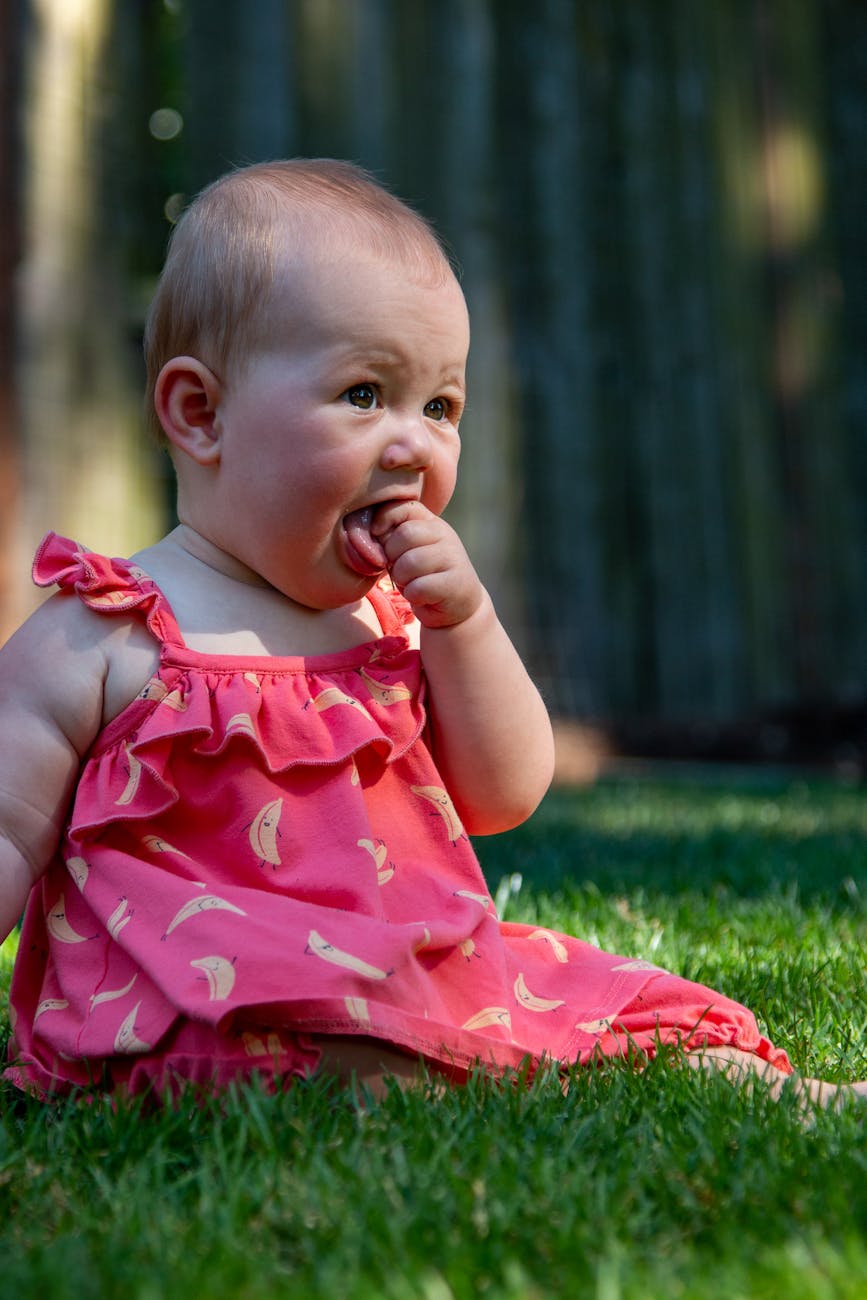
Putting objects in the mouth is a universal behavior among infants and young children. From a psychomotor perspective, it is a fundamental stage that contributes to the overall developmental process. Far from being a simple reflex, this oral exploration is a rich and complex way to discover the world and to build a sense of body identity.
From the very first months of life, the mouth is a privileged area of perception. It has a particularly developed tactile, thermal, and gustatory sensitivity. Through it, the child begins to establish their first sensory experiences. By bringing an object to the mouth, the child discovers its texture, temperature, shape, and sometimes even its hardness. This information creates a sensory database that enriches their perception of the world.
On a psychomotor level, this activity contributes to the construction of the body schema. By exploring objects with the mouth, the child becomes aware of the limits of their own body and learns to differentiate what belongs to them from what is external. This process is essential for developing inner security and self-esteem.
Mouthing is also linked to the development of coordination. The infant must adjust their grasp, guide the hand toward the mouth, and coordinate movements. This gesture, repeated hundreds of times, strengthens the connection between perception, movement, and action. It also prepares the child for later achievements such as independent feeding and even language, since oral motor skills are stimulated by these experiences.
Finally, from an emotional perspective, the mouth is also an area of soothing. Sucking, chewing, or nibbling allows the child to self-soothe, regulate emotions, and regain a sense of security similar to the one provided by breastfeeding or bottle-feeding.
Thus, bringing objects to the mouth should not be seen as a “bad habit”, but rather as a natural, essential, and beneficial stage. It reflects a harmonious development where the sensory, motor, and emotional dimensions intertwine to help the child grow and explore their environment.
Marion Bonvarlet
LIVE PSYCHOMOT
Articles sur le développement psychomoteur
 LIVE PSYCHOMOT