Voir son enfant marcher régulièrement sur la pointe des pieds peut rapidement questionner les parents. Est-ce une étape normale du développement ? Est-ce lié à un problème de tonus, d’équilibre ou de sensibilité ? Faut-il consulter un professionnel ?
La marche sur la pointe des pieds est relativement fréquente chez les jeunes enfants, notamment au moment où la marche se met en place. Certains enfants l’utilisent ponctuellement puis adoptent naturellement un appui avec le talon. Pour d’autres, cette façon de marcher peut persister plus longtemps et devenir une véritable habitude motrice.
Marcher sur la pointe des pieds ne signifie donc pas nécessairement qu’il existe un problème. Il est surtout important d’observer comment, quand et à quelle fréquence l’enfant marche sur la pointe des pieds.
Lorsqu’un enfant découvre la marche, il expérimente différentes façons de se déplacer, de gérer son équilibre et de transférer son poids d’un pied à l’autre. La marche sur la pointe peut faire partie de ces explorations motrices. Certains enfants l’utilisent lorsqu’ils sont excités, qu’ils courent, jouent ou sont particulièrement concentrés, alors qu’ils savent parfaitement poser leurs talons dans d’autres situations.
Plusieurs facteurs peuvent cependant expliquer une marche sur la pointe des pieds persistante. Elle peut être liée à une particularité du tonus musculaire, à une mobilité réduite des chevilles, à une recherche de stabilité ou encore à des besoins sensoriels particuliers. Les pieds transmettent en permanence de nombreuses informations au cerveau sur les appuis, les surfaces et la position du corps. Certains enfants peuvent ainsi rechercher certaines sensations en modifiant leur manière de prendre appui au sol.
En psychomotricité, la marche sur la pointe des pieds est donc observée dans une approche globale. On ne s’intéresse pas uniquement à la position du pied, mais à l’ensemble de l’organisation corporelle de l’enfant : son tonus, son équilibre, ses coordinations, sa mobilité, ses appuis, sa conscience corporelle et son rapport aux sensations.
Il est également intéressant d’observer si l’enfant est capable de marcher avec les talons au sol lorsqu’on lui propose une autre activité. Peut-il marcher lentement ? S’accroupir ? Monter et descendre une marche ? Marcher pieds nus ? Se déplacer sur différentes surfaces ? Courir, sauter ou se déplacer autrement ? Ces différentes expériences permettent de mieux comprendre son fonctionnement moteur.
Lorsque l’enfant marche sur la pointe des pieds, il n’est généralement pas nécessaire de lui répéter constamment « pose tes talons » ou « marche normalement ». La marche étant en grande partie automatisée, une sollicitation permanente peut davantage attirer son attention sur son corps qu’améliorer durablement ses appuis.
Il peut être beaucoup plus intéressant de lui proposer des expériences motrices variées et ludiques : marcher pieds nus sur différentes textures, jouer accroupi, ramper, grimper, pousser ou tirer des objets, réaliser des parcours moteurs, marcher comme différents animaux ou encore jouer à transférer son poids d’un pied à l’autre. Ces activités permettent à l’enfant d’explorer différentes sensations et de développer progressivement un répertoire moteur plus riche.
Une attention particulière peut néanmoins être portée lorsque la marche sur la pointe des pieds devient très fréquente ou semble être la seule manière de se déplacer. Il est notamment intéressant de demander un avis professionnel lorsque l’enfant ne parvient pas à poser ses talons au sol, présente une raideur importante des membres inférieurs, une limitation des mouvements de la cheville, des douleurs, une différence marquée entre les deux côtés du corps ou lorsque la marche sur la pointe s’accompagne d’autres particularités motrices ou sensorielles.
Dans ces situations, un médecin pourra évaluer l’enfant et, si nécessaire, orienter vers les professionnels adaptés. Le psychomotricien peut également réaliser une évaluation du fonctionnement psychomoteur afin de mieux comprendre les particularités des appuis, du tonus, de l’équilibre, de la coordination et de la sensorialité.
Ainsi, un enfant qui marche sur la pointe des pieds n’a pas forcément besoin d’être « corrigé ». L’enjeu est plutôt de comprendre pourquoi il utilise cette stratégie et de vérifier qu’il dispose également d’autres possibilités motrices.
Chaque enfant évolue à son propre rythme. Une marche sur la pointe des pieds occasionnelle et une marche exclusivement sur la pointe des pieds ne renvoient pas aux mêmes situations. L’observation de l’enfant dans son ensemble permet donc de déterminer si cette particularité correspond simplement à une étape de son développement ou si elle mérite une évaluation plus approfondie.
En psychomotricité, l’objectif est avant tout de permettre à l’enfant de mieux investir son corps, diversifier ses appuis et enrichir ses expériences motrices, dans un cadre ludique et adapté à son développement.
Marion Bonvarlet
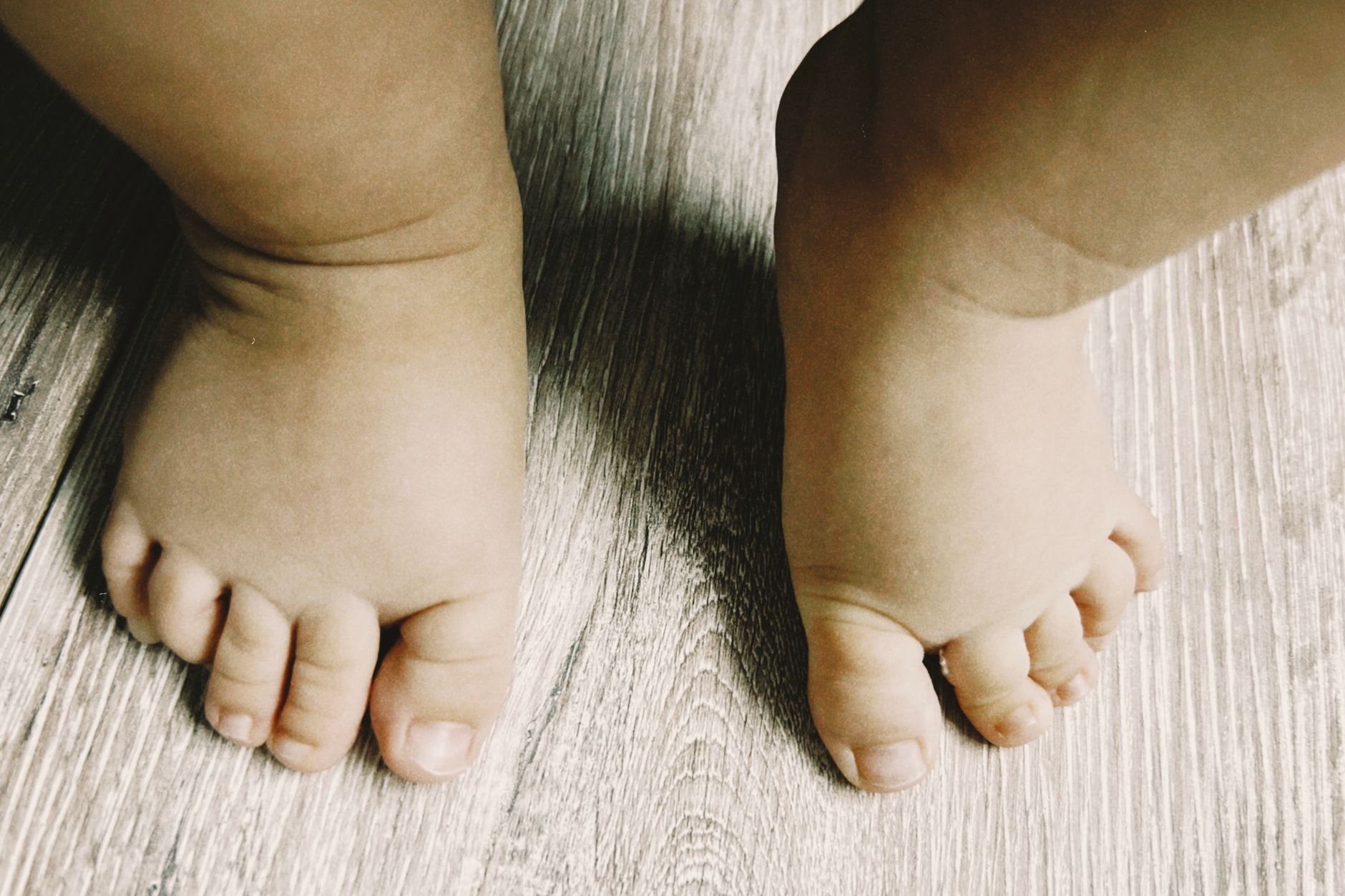
Seeing your child regularly walking on their toes can quickly raise questions for parents. Is it a normal stage of development? Could it be related to muscle tone, balance, or sensory processing? Should you seek professional advice?
Toe walking is relatively common in young children, particularly when they are first learning to walk. Some children use this walking pattern occasionally and then naturally begin to place their heels on the ground. For others, toe walking may persist for longer and become a more established motor habit.
Walking on tiptoes does not necessarily mean that there is a problem. What is most important is to observe how, when, and how often the child walks on their toes.
When a child is learning to walk, they experiment with different ways of moving, managing their balance, and shifting their weight from one foot to the other. Toe walking can be part of this motor exploration. Some children use it when they are excited, running, playing, or particularly focused, while still being perfectly able to put their heels down in other situations.
Several factors can contribute to persistent toe walking. It may be related to differences in muscle tone, reduced ankle mobility, a search for stability, or particular sensory needs. The feet constantly provide the brain with information about pressure, surfaces, and the position of the body. Some children may therefore seek certain sensations by changing the way they place their feet on the ground.
In psychomotor therapy, toe walking is therefore considered from a global perspective. We do not focus solely on the position of the foot, but on the child’s overall motor organisation: muscle tone, balance, coordination, mobility, weight-bearing, body awareness, and sensory processing.
It is also useful to observe whether the child is able to walk with their heels on the ground when engaged in another activity. Can they walk slowly? Squat down? Walk up and down a step? Walk barefoot? Move across different surfaces? Run, jump, or move in other ways? These different experiences help us better understand the child’s motor functioning.
When a child walks on their toes, it is generally not necessary to constantly tell them, “Put your heels down” or “Walk normally.” Walking is largely an automatic process, and constantly drawing attention to it may make the child more focused on their body without necessarily improving their foot placement in the long term.
It can be much more helpful to offer varied and playful movement experiences: walking barefoot on different textures, playing in a squatting position, crawling, climbing, pushing or pulling objects, completing motor obstacle courses, walking like different animals, or playing games that involve shifting weight from one foot to the other. These activities allow children to explore different sensations and gradually develop a richer range of motor strategies.
Particular attention may nevertheless be warranted when toe walking becomes very frequent or appears to be the child’s only way of moving. It is especially advisable to seek professional advice if the child is unable to place their heels on the ground, has significant stiffness in the lower limbs, limited ankle movement, pain, a marked difference between the two sides of the body, or if toe walking is accompanied by other motor or sensory differences.
In these situations, a doctor can assess the child and, if necessary, refer them to the appropriate professionals. A psychomotor therapist can also carry out a psychomotor assessment to better understand the child’s patterns of weight-bearing, muscle tone, balance, coordination, and sensory processing.
Therefore, a child who walks on their toes does not necessarily need to be “corrected.” The goal is rather to understand why they are using this strategy and to make sure they also have access to other ways of moving.
Every child develops at their own pace. Occasional toe walking and walking exclusively on the toes do not necessarily indicate the same situation. Observing the child as a whole therefore helps determine whether this motor pattern is simply part of their development or whether it would benefit from further assessment.
In psychomotor therapy, the primary aim is to help children develop a better awareness of their bodies, diversify their weight-bearing patterns, and enrich their movement experiences, within a playful and developmentally appropriate environment.
Marion Bonvarlet
LIVE PSYCHOMOT
Articles sur le développement psychomoteur

